

You optimise for efficiency. We add the robustness.
Biopharma CMC & Biosimilars · MSAT, Technology Transfer & Technical Due Diligence
Programmes change hands. That's where they break.
An asset gets in-licensed. A process moves to a new site, a new scale, a new country. A supplier disappears and the material has to change. Every one of these is the same underlying event, and every one of them is decided by whether the analytical and process evidence holds up when someone asks.
Failure is rarely dramatic. It shows up as a process that behaved one way at 200 L and another at 2000 L. A reference standard that was never properly bridged. A specification justified on twelve batches, eleven of them from the site you are leaving.
That is our practice. We assess programmes before they move — technical due diligence for in-licensing, M&A and investment. We move them: technology transfer, facility fit, manufacturing readiness. And we defend the move: comparability, variation strategy, and the CTD sections that carry the change to the agency. Five market authorisations across EMA, FDA and PMDA. The documents were ours, and we answered for them.
Most of this work is already being done by someone. What we bring is the judgement about where a programme would fail, and the evidence that it doesn't. You optimise for efficiency. We add the robustness.
DevelopmentMarket
Select a point on the line to see which packages apply.
Why clients bring us in Seven situations
- A decision before the evidence is in. An asset is being in-licensed or acquired and the CMC package has to be judged, not just read. The data room says what was done. It rarely says what will fail.
- A transfer being run as a schedule. The project plan exists and the timeline is tracked. What is missing is someone asking whether the receiving facility can actually run the process, and whether the comparability position will survive contact with the agency.
- Change that wasn't chosen. A raw material is discontinued, a supplier or site is switched, a scale change is forced. The manufacturing answer is usually clear within weeks. The variation strategy and the comparability argument that make it defensible are not.
- A question from the agency, with a clock attached. A Major Objection, an information request, or a CMC deficiency raised on the dossier — and a fixed number of days to answer it. The underlying science is usually settled inside the team within a week. What is missing is someone who has defended these sections in front of an assessor before, and knows which arguments land and which invite a second round.
- A weakness surfacing close to filing. A control strategy gap or comparability problem appears late, when the options are narrow and the people who know the programme are already committed elsewhere.
- A CDMO being managed, not held to a standard. Deliverables arrive and meetings happen. What the sponsor lacks is someone technically senior enough to say that a method is not fit for purpose and be right about it.
- Documentation that needs an author, not a compiler. Module 3 and supporting CMC sections written by people who have defended them in front of the agency — because the difference shows at review, not at submission.
If two of these describe your programme, the due diligence package is usually where we start.
Two practices, one CMC picture.
Most CMC problems sit at the seam between analytics and process. Covering both sides in a single engagement is the core purpose of our firm.
We bring extensive experience across complex novel biological entities — monoclonal antibodies, fusion proteins, bispecific antibodies and multispecific protein complexes — as well as biosimilar development programmes.
What each practice covers Twelve capabilities, two principals
CMC, Analytical & Regulatory
Ákos Szekrényes
- CMC strategy and product development
- Analytical development, method transfer and validation
- Comparability and biosimilarity
- Control strategy and method lifecycle
- Quality leadership and laboratory operations
- Regulatory CMC and health authority interaction
MSAT, Technology Transfer & Downstream Processing
Veronika Szekrényes, PhD
- Technology transfer and manufacturing readiness
- Facility fit and scale-up
- MSAT and process technical support
- Downstream processing and purification
- Raw materials and single-use systems
- GMP documentation and process validation
Defined deliverables, not open-ended engagements.
Scope, inclusions and exclusions are agreed in writing before work begins. Timelines are confirmed at proposal stage.
The eleven packages CMC and analytical · MSAT and downstream · lifecycle
CMC, Analytical & Regulatory
CMC Due Diligence & Portfolio Review
Asset and portfolio assessment for in-licensing, M&A and investment decisions. Risk register and deal-critical findings.
CMC Gap Assessment & Development Plan
Where a programme stands against regulatory expectations, what is missing, and the critical path to filing.
Comparability & Biosimilarity Strategy
Similarity approach, attribute tiering, statistical strategy, and reference product sourcing and characterisation, framed against ICH Q5E and current EMA and FDA comparability expectations.
Analytical Control Strategy & Specification Justification
CQA identification, specification setting and justification, and method lifecycle planning under ICH Q14 and Q2(R2), including analytical method transfer designed against USP <1224>.
Module 3 / CTD-Q Authoring
Drug substance (3.2.S) and drug product (3.2.P) sections, authored by people who have defended them before health authorities.
MSAT, Technology Transfer & Downstream Processing
Technology Transfer Package
Transfer protocols and reports, readiness assessment, and the documentation set for moving a process into a receiving GMP environment.
Facility Fit & Scale-Up Assessment
Site capability, equipment suitability, capacity modelling, and gap assessment against process requirements.
Raw Materials & Single-Use Qualification
Qualification protocols, bridging study design, extractables and leachables, compatibility, and secondary supplier strategy.
Process Characterisation & Robustness Review
Characterisation strategy, design-of-experiments justification, performance evaluation, and downstream robustness.
CDMO Selection & Evaluation
Evaluation criteria, technical due diligence on candidate sites, and structured comparison against programme requirements.
Lifecycle
Post-Approval Change & Lifecycle Management
Comparability protocols for site transfers, scale changes and supplier changes; PACMP design under ICH Q12; variation strategy and classification. Drawn from both practices.
Same two people, start to finish.
A principal leads the engagement and stays with it. You are not passed to a new contact when the work begins, and not to a third when it gets difficult. One of us owns the analytics, the other the process, and on most programmes you will work with both. That experience runs from small biotech to the industry's best-known names, on both the sponsor side and the CDMO side.
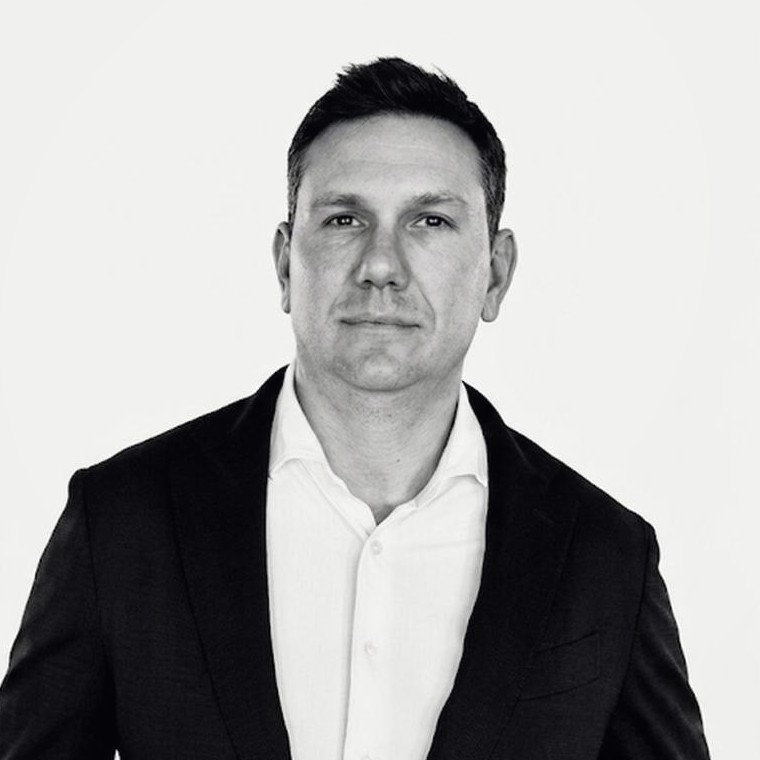
Co-founder & Principal Consultant · Analytical, CMC and Quality
Ákos Szekrényes
Over thirteen years across analytical development, quality and regulatory CMC in monoclonals and biosimilars. Contributed to five global market authorisations spanning EMA, FDA and PMDA. Built and led a 25-person analytical department at mAbxience, with further roles at Alvotech, Ichnos Sciences, Gedeon Richter and Egis. Trained at the Horváth Laboratory, University of Debrecen.

Co-founder & Principal Consultant · Process, Manufacturing and MSAT
Veronika Szekrényes, PhD
Over seven years in biologics manufacturing across Thermo Fisher, Lonza and Biogen, focused on downstream processing and MSAT for monoclonal antibodies. Has owned technology transfers into GMP facilities at clinical scale and contributed to commercial manufacturing campaigns, working across process design, characterisation, scale-up and manufacturing readiness. PhD in Analytical Chemistry, University of Pardubice, Czech Republic, with published work in antibody conjugation and immunoassay development.
How we engage.
Engagements are remote-first. Which structure applies depends on how far the work can be defined in advance.
- Fixed-fee deliverables. A defined scope at a fixed price, with one revision cycle included.
- Day rate. Available for advisory roles, oversight and standing technical support.
- Retainer. Priority access and continuity of the same two people across a programme, at preferential rates.
- Individual scoping. Regulatory strategy, health authority interaction and technical investigations are quoted case by case, since their extent cannot be fixed in advance.
Start with a conversation.
Tell us where the programme sits and what decision is coming. We will send the scope note for the relevant package — and if it isn't work we should be doing, we will say so.
Let's talk